
Best Places to See Northern Lights in Iceland: Ultimate Guide for 2026
Seeing the Northern Lights is one of the most magical experiences on Earth—and Iceland is one of the best places in the world to witness this natural phenomenon. If you’re searching for the best places to see Northern Lights in Iceland, this detailed guide will help you plan the perfect aurora adventure for 2026.
From remote lagoons to dramatic glaciers, Iceland offers countless stunning locations where the skies come alive with shimmering green, purple, and pink hues during winter. In this post, you’ll get:
- When to visit Iceland for the Northern Lights in 2026.
- The top viewing regions and specific spots (Thingvellir, Jökulsárlón, Snæfellsnes, Westfjords, North Iceland, South Coast, and Reykjanes).
- Guided tours vs self‑drive options.
- Photography tips and aurora forecasting tools.
- Common mistakes to avoid and how to travel affordably in Iceland, including money‑saving strategies from this guide on how to travel Iceland on a budget.
For a full Iceland itinerary that pairs well with your aurora chasing, check out this main guide to the incredible places to visit in Iceland.
Why Iceland Is One of the Best Places to See Northern Lights
Iceland sits just below the Arctic Circle, giving it a privileged position inside the “auroral oval”—the ring‑shaped zone where the Northern Lights occur most frequently. This geographic advantage, combined with low light pollution, vast open landscapes, and long winter nights, makes Iceland one of the top destinations for aurora chasers worldwide.
Key advantages for aurora viewing in Iceland
- Prime location in the auroral zone: The magnetic equator of the aurora often passes over or near Iceland, especially during periods of high solar activity.
- Minimal light pollution: Aside from Reykjavík and a few towns, most of the country is sparsely populated, so you can easily find dark‑sky areas ideal for clear aurora displays.
- Long, dark winter nights: From late September to early April, daylight is short and nights are long, giving you more hours in darkness when the lights are visible.
- Stunning natural backdrops: Whether you’re watching from a glacier lagoon, black‑sand beach, or a lava field, Iceland’s dramatic scenery makes every aurora moment more cinematic.
For 2026, the solar cycle is still in a relatively active phase, which means you have a strong chance of seeing vivid displays if you pair good timing with the right location and weather.
Best Time to See Northern Lights in Iceland
Peak Northern Lights season
Across most guides and tour operators, the standard Northern Lights season in Iceland is from early September to mid‑April. During this window, nights are long enough for darkness, yet temperatures are often more manageable than in places deeper inside the Arctic.
Within that season, many travelers prefer:
- Mid‑September to October: Fewer tourists, clearer skies, and relatively mild temperatures.
- November to February: Deepest darkness, but harsher weather and shorter days; ideal if you can tolerate cold and storms.
- March: Still good darkness, milder weather than mid‑winter, and often lots of snow on the ground for beautiful reflections.
Best hours and solar activity
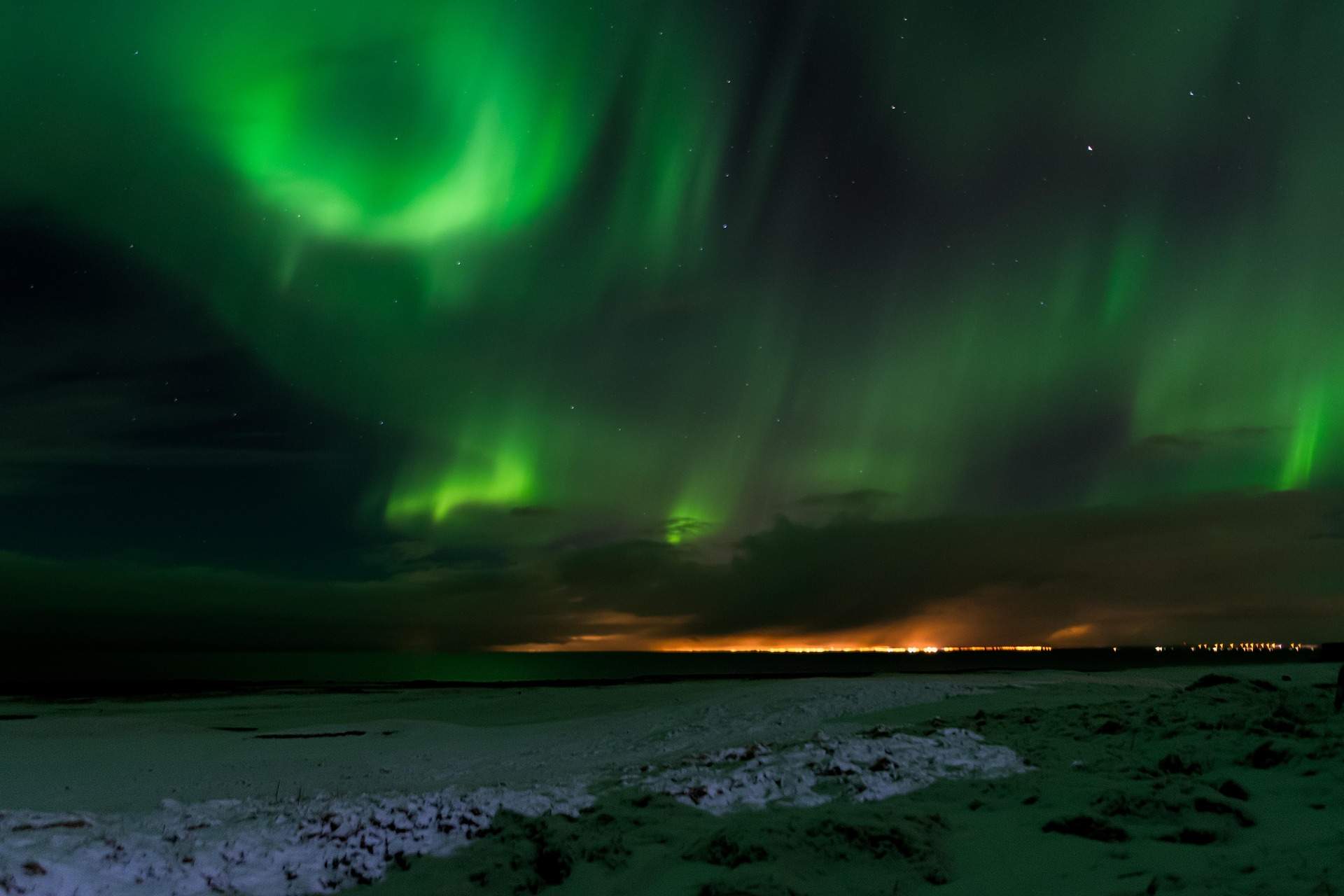
The typical best viewing window is between 9:00 PM and 2:00 AM, when the sky is fully dark and geomagnetic activity is usually higher. Many sources even narrow this to 11:00 PM–1:00 AM for peak visibility.
For clear sightings you need three main ingredients:
- Darkness: No twilight or strong moonlight blocking fainter aurora bands.
- Clear or partly cloudy skies: High cloud cover will hide the display.
- Geomagnetic activity (KP index): A KP index of 3 or higher increases your chances of bright, structured auroras.
Plan to spend at least 5–7 nights in Iceland during the season to raise your probabilities of catching a good show.
Best Places to See Northern Lights in Iceland
Depending on your base, time, and comfort level, you can choose between easily accessible spots near Reykjavík and remote, crowd‑free zones deeper in the countryside. Here are the top regions and specific spots to add to your 2026 itinerary. Many of these locations also appear in a broader list of incredible places to visit in Iceland, so you can easily combine daytime sightseeing with night‑time aurora chases.
1. Thingvellir National Park (Golden Circle)
Best for: First‑time visitors, short trips from Reykjavík, and those who still want comfort and infrastructure.
Thingvellir (Þingvellir) National Park is one of the most iconic places in Iceland and also one of the most accessible Northern Lights locations. It’s part of the Golden Circle route, about 45 minutes’ drive from Reykjavík, yet once you move away from the main parking areas, light pollution drops sharply.
Key benefits:
- Wide open landscapes: Large valleys and flat plains provide unobstructed views to the northern horizon.
- Minimal light pollution outside the main facilities: Park a short distance from the visitor center and you have dark skies.
- Easy road access and safety: Main roads are well maintained and marked, even in winter.
Recommended spots within Thingvellir:
- Parking near Öxarárfoss waterfall for a dramatic foreground.
- Areas along Thingvallavatn lake where auroras reflect off the water.
2. Jökulsárlón Glacier Lagoon
Best for: Photographers, nature lovers, and those who want a bucket‑list level aurora experience.
Jökulsárlón Glacier Lagoon is one of the most photogenic places in Iceland, and under the Northern Lights it becomes almost otherworldly. The lagoon lies on the southeast coast, about 5–6 hours by car from Reykjavík, and forms part of the popular South Coast route.
Why it’s special:
- Aurora reflections on icebergs: When the sky is active, the green and purple lights shimmer across the floating ice, creating layered reflections.
- Close to Diamond Beach: Just a short walk from the lagoon, this black‑sand stretch is littered with ice fragments that glow under low light.
- Fewer crowds than near Reykjavík: Most visitors stay in Höfn or nearby towns, so the lagoon area is quieter at night.
Tips for a Jökulsárlón Northern Lights visit:
- Stay overnight in Höfn or nearby guesthouses to avoid long drives back under dark, icy roads.
- Bring a tripod and warm layers; even short exposures (10–20 seconds) can capture the reflections beautifully.
3. Snæfellsnes Peninsula
Best for: Road‑trip style travelers who want a “mini‑Iceland” experience with mountains, lava fields, and coastline.
Often called “Iceland in miniature,” the Snæfellsnes Peninsula packs glaciers, volcanic peaks, coastal cliffs, and fishing villages into a compact area about 2–3 hours from Reykjavík. Its mix of terrain makes it one of the most diverse Northern Lights viewing regions.
Highlights:
- Kirkjufell mountain: One of Iceland’s most photographed peaks, frequently framed under swaying aurora curtains.
- Grundarfjörður and Stykkishólmur: Coastal towns with low light pollution and excellent sky views.
- Snæfellsjökull glacier: Snow‑covered peaks enhance the contrast of the lights on the horizon.
Because weather can change quickly here, many tour operators run Northern Lights safaris out of Grundarfjörður or Stykkishólmur, often combining aurora viewing with local photography workshops.
4. The Westfjords
Best for: Off‑the‑beaten‑path travelers who want solitude, dramatic fjords, and minimal crowds.
The Westfjords region is one of the least‑visited parts of Iceland, but it’s also one of the darkest—making it a hidden gem for aurora hunting. The combination of steep fjords, narrow peninsulas, and tiny coastal villages means you can often see the sky stretch from horizon to horizon with almost no artificial light.
Top spots:
- Ísafjörður: The largest town in the Westfjords, with good facilities and easy access to quieter viewpoints.
- Rauðisandur Beach: A rare golden‑sand beach where the Northern Lights sometimes reflect off the water.
- Patreksfjörður and surrounding peninsulas: Remote, quiet areas with dramatic cliffs and fjord views.
Travel considerations:
- Roads can be narrow and occasionally closed after heavy snow; always check Safetravel.is before driving.
- Services are limited, so plan fuel and supplies in advance.
5. North Iceland (Around Akureyri)
Best for: Travelers who want stable weather and a mix of towns, lakes, and waterfalls.
While many visitors focus on the south, North Iceland—centered on the town of Akureyri—is often praised for clearer skies and more stable winter conditions. The region is a popular base for Northern Lights tours, especially in the Mývatn area.
Top viewing spots:
- Lake Mývatn: Surrounded by volcanic formations, lava fields, and geothermal vents, this lake offers dark‑sky conditions and dramatic foregrounds.
- Goðafoss (Waterfall of the Gods): The powerful waterfall can be lit under aurora displays, creating a very cinematic shot.
- Coastal areas around Eyjafjörður: The fjord provides a natural “frame” for the sky.
Because northern Iceland experiences less coastal cloud cover than the south, your chances of clear nights are often higher.
6. South Coast
Best for: Scenic road‑trippers who want waterfalls, black‑sand beaches, and easy access from Reykjavík.
The South Coast is one of the most popular routes in Iceland, stretching from Reykjavík east toward the glaciers and leading directly to Jökulsárlón. Each major stop along the way doubles as a potential Northern Lights viewing site.
Best locations:
- Skógafoss waterfall: The towering curtain of water can be framed behind aurora bands, especially on clear nights.
- Reynisfjara Beach: Iconic black‑sand beach with basalt columns and sea stacks that create dramatic silhouettes under the lights.
- Vík í Mýrdal village: A small town with easy road access and several nearby spots for aurora viewing.
Nighttime visits work best when planned as part of a multi‑day South Coast loop, mixing daytime sightseeing with late‑evening aurora sessions.
7. Reykjanes Peninsula
Best for: Short trips, airport‑area stays, and travelers with limited time in Iceland.
The Reykajes Peninsula, located just south of Reykjavík and the international airport, is an excellent option if you have only a day or two in the country. It combines easy access with coastal cliffs, geothermal areas, and relatively low light pollution.
Advantages:
- Close to Keflavík Airport and Reykjavík: Ideal if you want to fit in a quick aurora hunt before departure or right after arrival.
- Coastal landscapes and lagoons: The ocean horizon and geothermal fields create interesting foregrounds.
- Fewer tourists than Golden Circle: Less crowded than the heavily visited Golden Circle route.
Areas to explore:
- Main coastal roads away from towns like Grindavík.
- Scenic viewpoints near the Blue Lagoon or Krýsuvík geothermal area (if timing allows). [